
Infrared photography has changed the way I see familiar landscapes. It reveals qualities of light, texture and contrast that are often invisible to the eye. In this collection, I share a few images from my own explorations, highlighting some of the different considerations and ways in which the landscape responds to the conditions in which it was photographed.
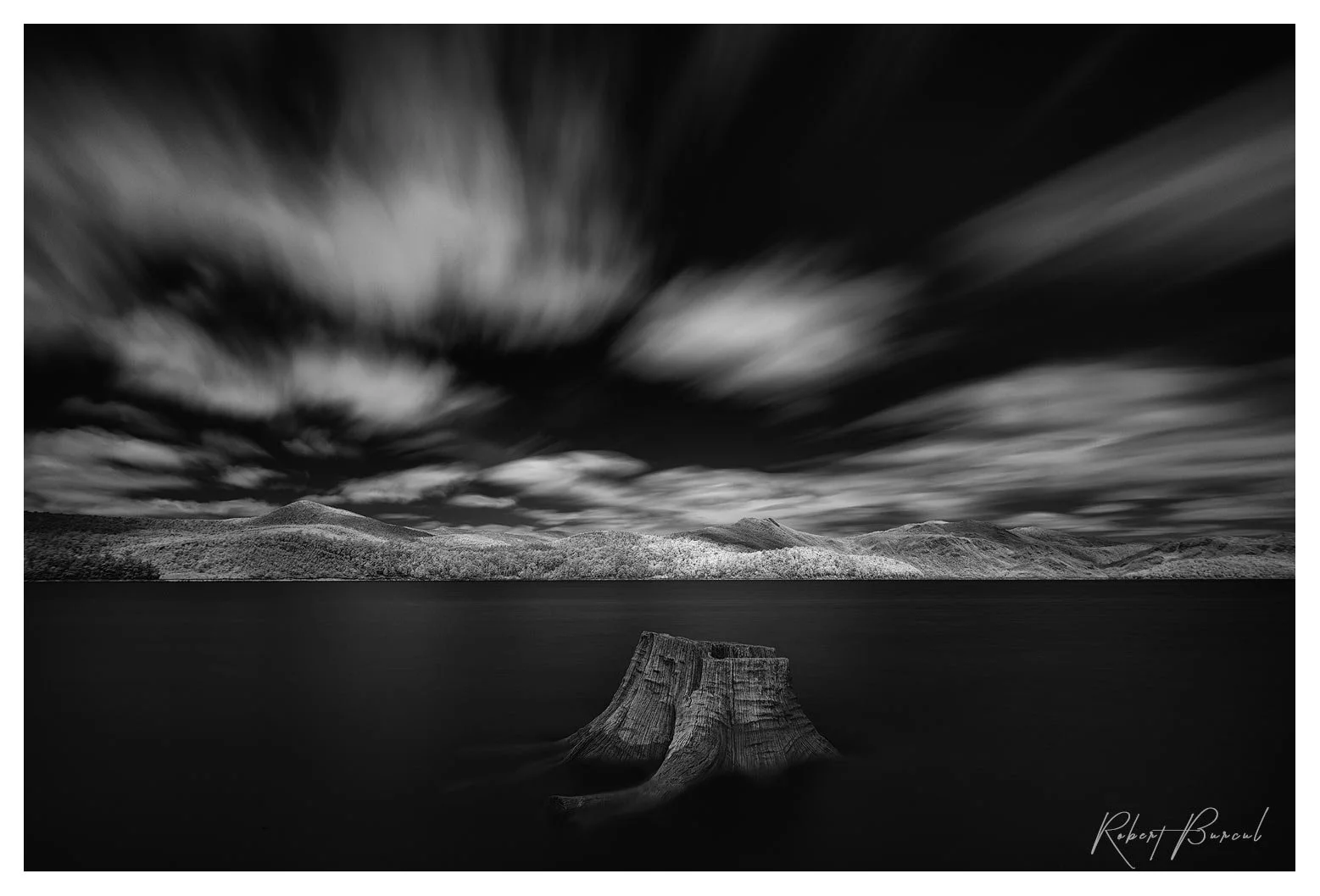
This type of scene, photographed in the middle of the day, is one example where infrared excels over traditional black and white photography. The sun has already climbed high in the sky, and the sky is mostly clear and blue, with white, puffy clouds streaking across it, driven by the high wind currents. Because the sky and water absorb infrared wavelengths, they create a dark tonal contrast against the white clouds, and the image becomes almost graphical in nature.
A carefully timed exposure captures the mysterious shimmer of specular highlights. Light creates a unique signature across the gently swaying surface of the mountain lake. Infrared seems to capture this kind of tonal contrast more effectively than traditional black and white photography.
A broken off branch of bull kelp lies exposed on the rocky ocean shore. The image captures the delicate and intricate structure of its leaves, resembling an X-ray image. This effect is made possible by the high concentration of chlorophyll within the kelp. Chlorophyll strongly reflects near-infrared wavelengths, causing the kelp to appear almost pure white and revealing its delicate texture and structure against the dark rocks in the foreground.
Low lying morning clouds stretch above the edge of the lagoon, while the surrounding vegetation creates a strong contrast against the dark sky and water surface. Both the clouds and vegetation strongly reflect infrared wavelengths, in contrast to the clear blue sky and calm water, which absorb infrared light and therefore render as dark, deep black tones.
While this image has captured the harsh nature of the mountain environment in which these gums live, it also highlights the importance of carefully considering and selecting scenes that are better suited to infrared black and white photography. Scenes like this one contain abundant vegetation and foliage, which, when photographed in infrared, render with relatively low contrast against the background. As a result, achieving clear separation between the subject and its surroundings presents a practical challenge.
This could be an example of an image better suited to a landscape capture. It is a long exposure image that contains contrast between the lighter and darker vegetation along the horizon, together with the interesting impression of white clouds streaking across the sunny blue sky. A fallen tree branch in the foreground is reflected in the glistening surface of the foreshore.
However, subject selection is highly subjective, while light is unpredictable. As a result, infrared photography can produce unexpected and sometimes remarkable results that simply work, even in scenes that may not initially appear ideally suited to the medium.
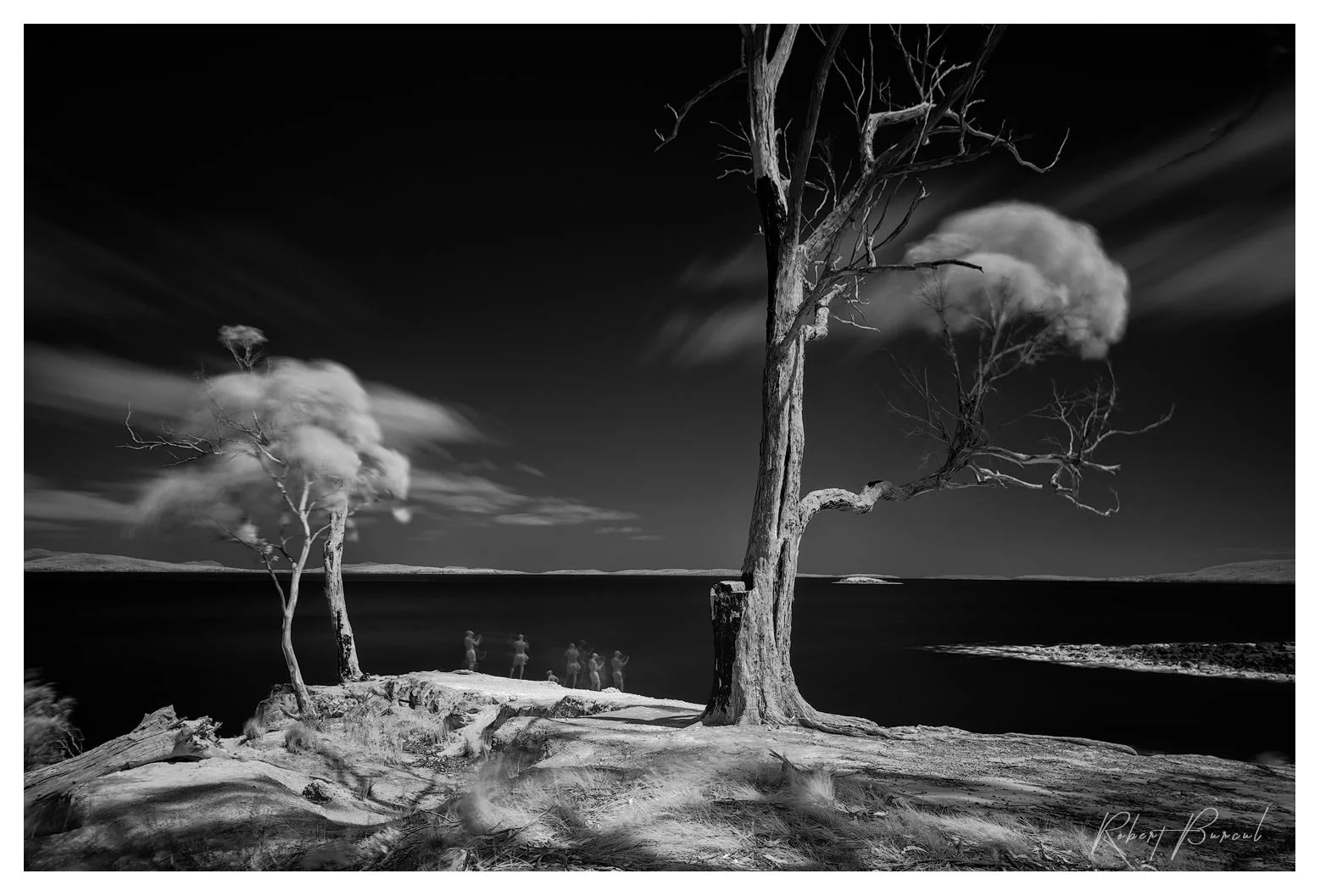
This seascape image demonstrates the typical infrared rendering of a scene captured on a clear, sunny day with blue skies. The ocean is often rendered as the darkest element, while the sky tends to appear slightly lighter. Note how the central part of the sky is considerably brighter, often requiring some darkening during post-processing.
I had an unexpected visitor walk into the scene. As he moved around taking photographs with his iPhone, the long exposure rendered him as a series of overlapping human figure images.
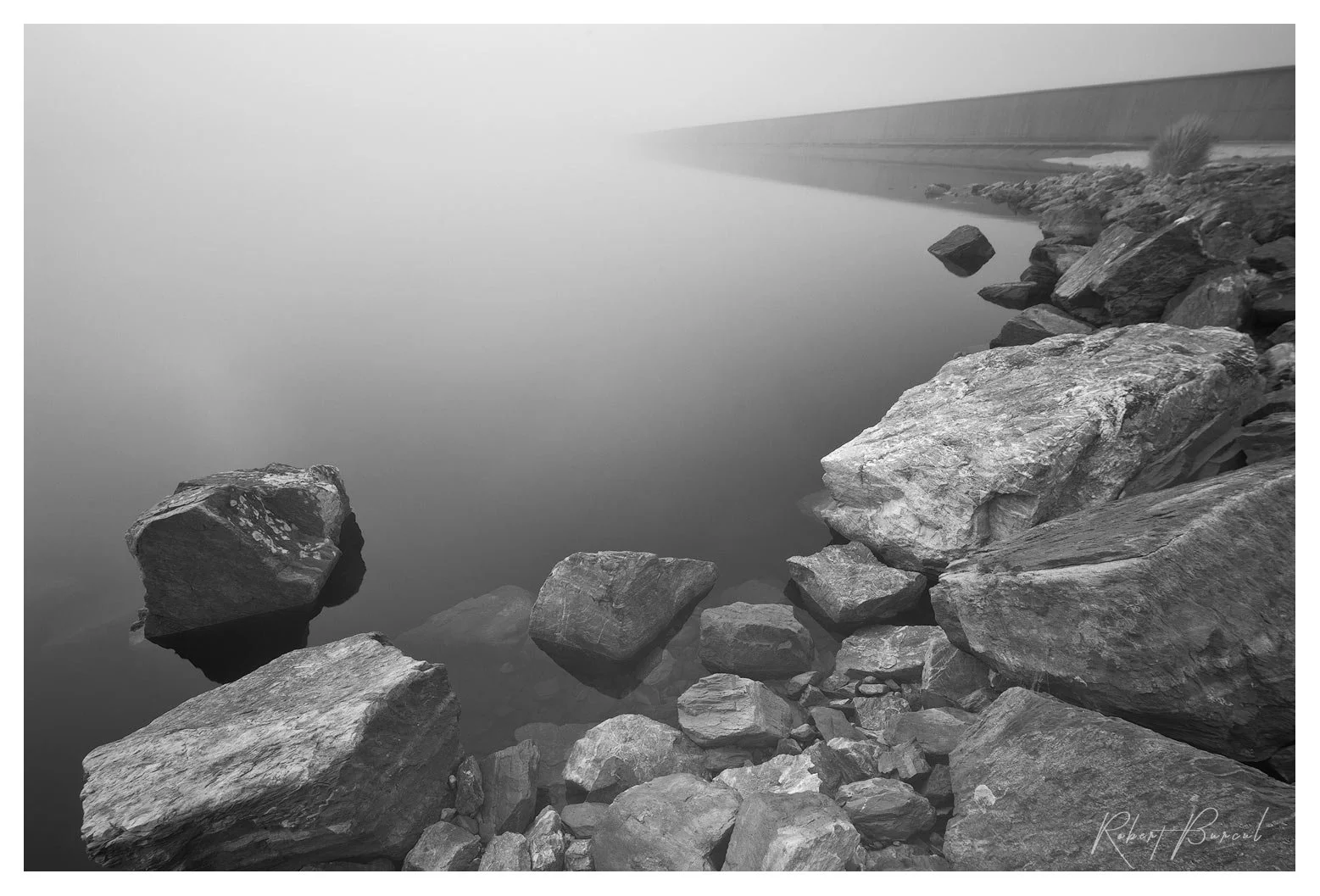
This image was made early in the morning, while fog was still hovering above the surface of the lake. It created an interesting sense of depth, with the dam wall gradually disappearing into the distance. Note how the tones in this image are considerably lighter than in the others because there was not sufficient infrared radiation in the sunlight. The close up foreground rocks contain a wealth of detail and texture.