
Infrared
Black and White Photography
Infrared black and white photography offers an alternative way of seeing, revealing tonal relationships beyond visible light. By recording infrared wavelengths that are not perceived by the human eye, familiar scenes are transformed, often appearing quieter, more abstract, and subtly removed from naturalistic representation. The resulting images invite a slower and more attentive reading of form, light, and atmosphere.
-

Subject rendering
In infrared black and white photography, subjects are rendered through tonal responses that differ markedly from visible-light photography. Vegetation often appears luminous, skies tend toward deeper tonal values, and water surfaces can become smooth and reflective. These shifts in tone distinguish infrared work from conventional black and white photography, where subjects are rendered within a more familiar range of greys.
-

Contrast and tonality
Infrared black and white photography often exhibits pronounced tonal separation, with highlights and shadows responding differently to infrared light than to visible wavelengths. This interaction can produce brighter highlights and deeper shadows, shaping images with a distinct tonal structure. These tonal characteristics arise from the physical behaviour of infrared light as it interacts with different materials and surfaces.
-

Infrared reflections
In infrared black and white photography, reflections can behave differently due to the way certain materials respond to infrared light rather than visible wavelengths. Surfaces such as water, foliage, and built elements may reflect infrared light in unexpected ways, altering the relationship between subject and reflection. These effects can introduce subtle shifts in structure and tone, contributing to a more abstract reading of the image.
-
Ethereal and surreal aesthetics
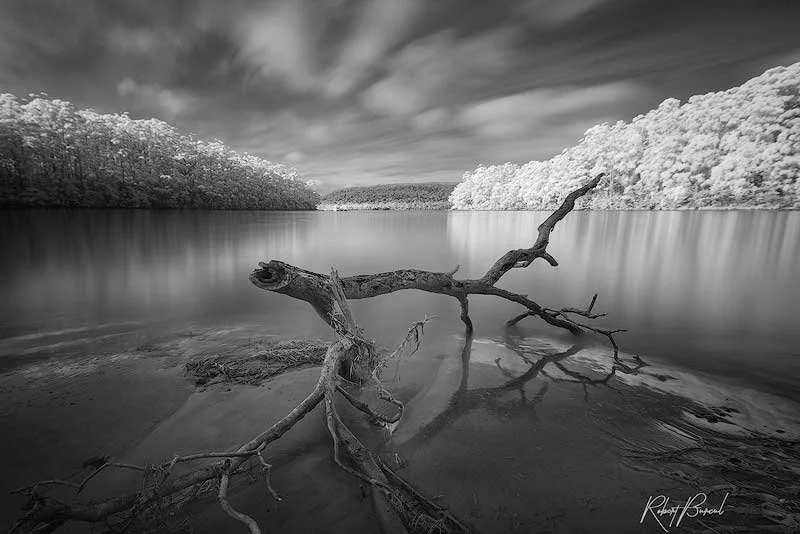
Infrared black and white photography can produce images that feel removed from everyday visual experience. This quality emerges from the way infrared light alters the rendering of subjects, textures, and light, rather than from any attempt to create the unreal. In contrast, conventional black and white photography tends to remain closer to familiar visual relationships, depending on subject matter, lighting, and photographic approach.
-
Equipment and techniques
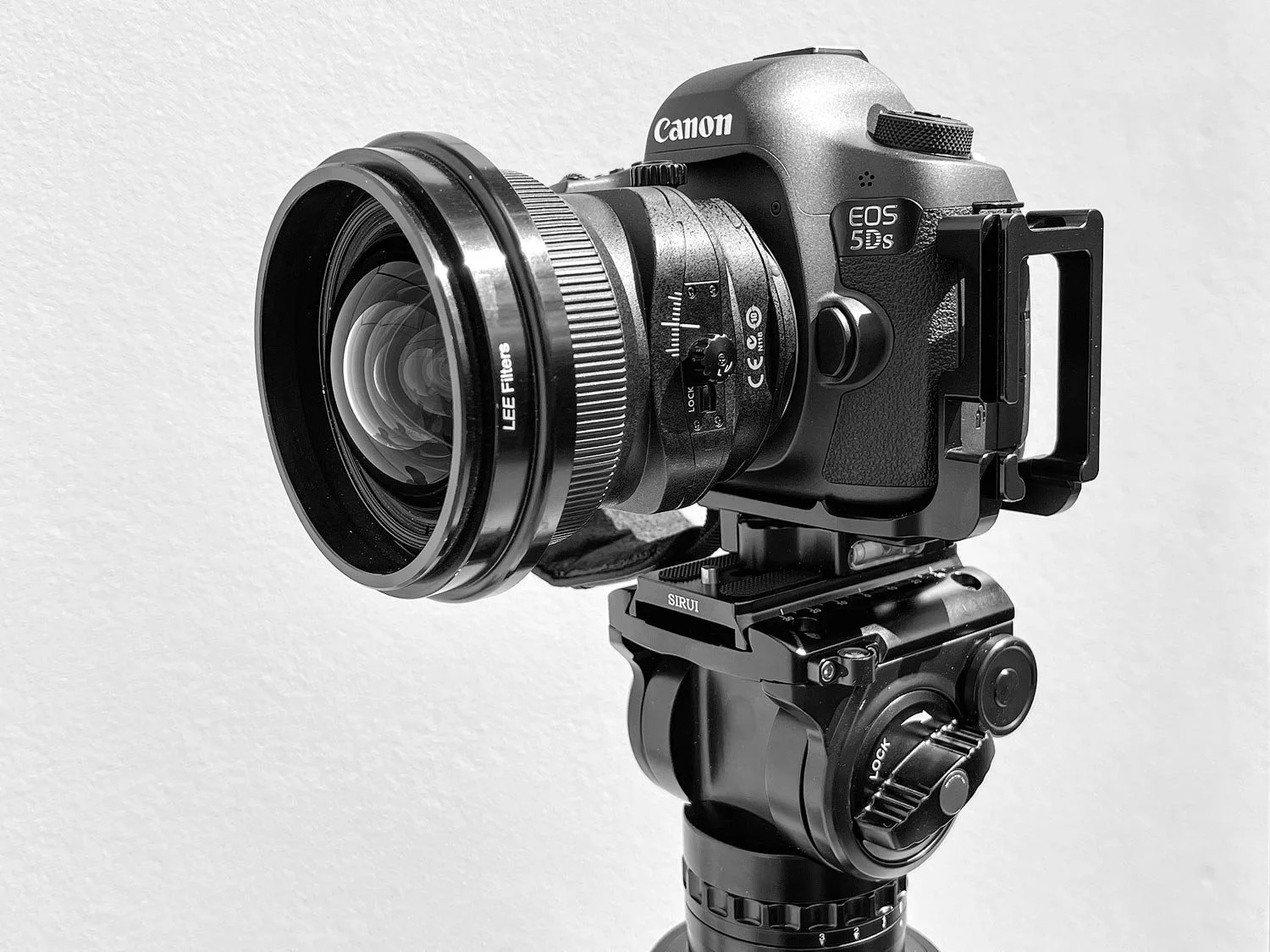
Infrared black and white photography requires equipment or camera modifications that allow infrared wavelengths to be recorded, either through the use of infrared filters or by modifying the camera to remove the infrared blocking filter. The resulting files are processed using methods specific to infrared capture, reflecting the different tonal behaviour of infrared light.
Conventional black and white digital photography relies on standard camera systems designed for visible light and uses post-processing approaches that reflect those characteristics.
-
Wider Context
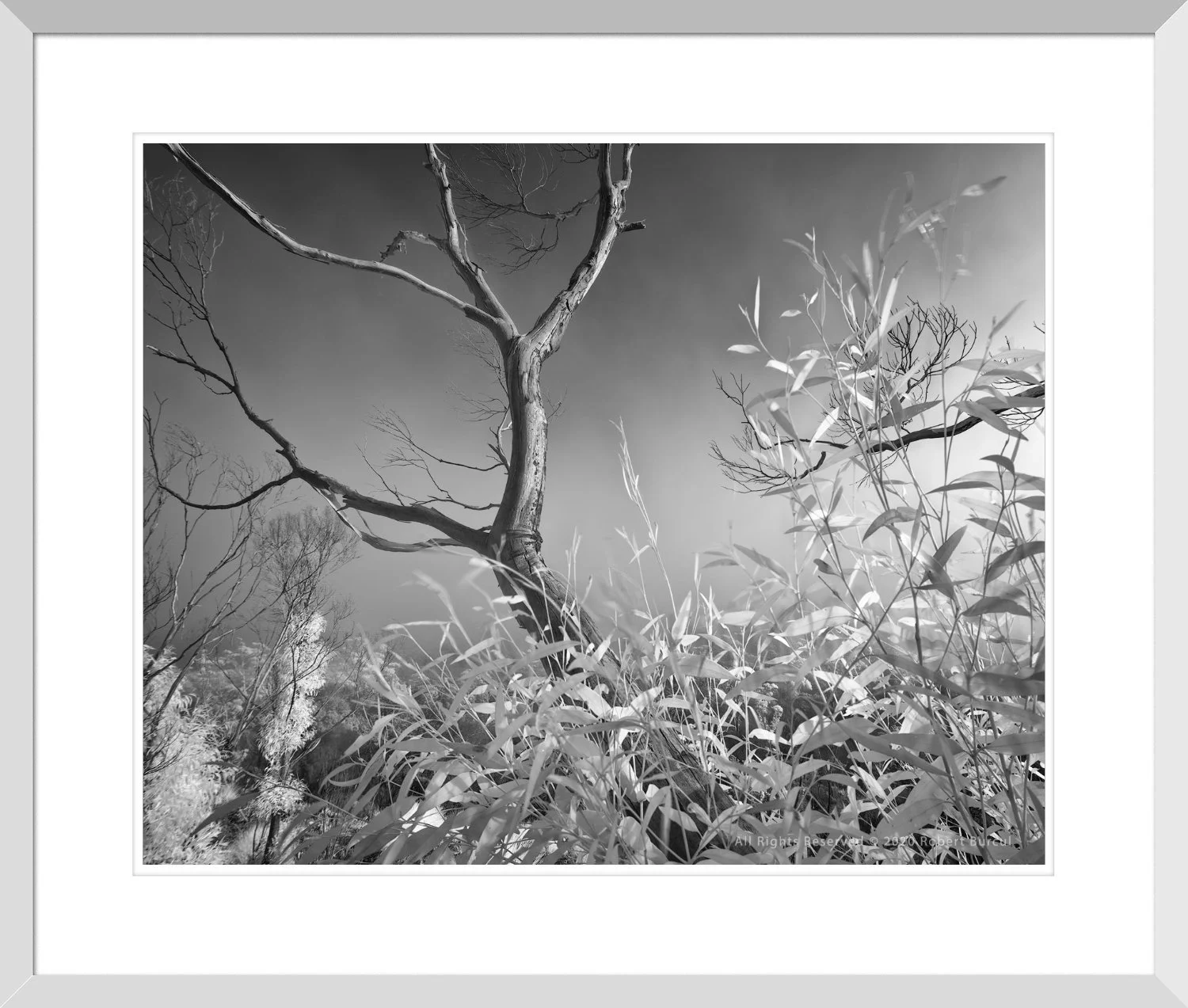
Within the broader body of work, infrared photography functions as another way of attending to light, form, and change, extending the same quiet, observational approach that underpins the wider practice.